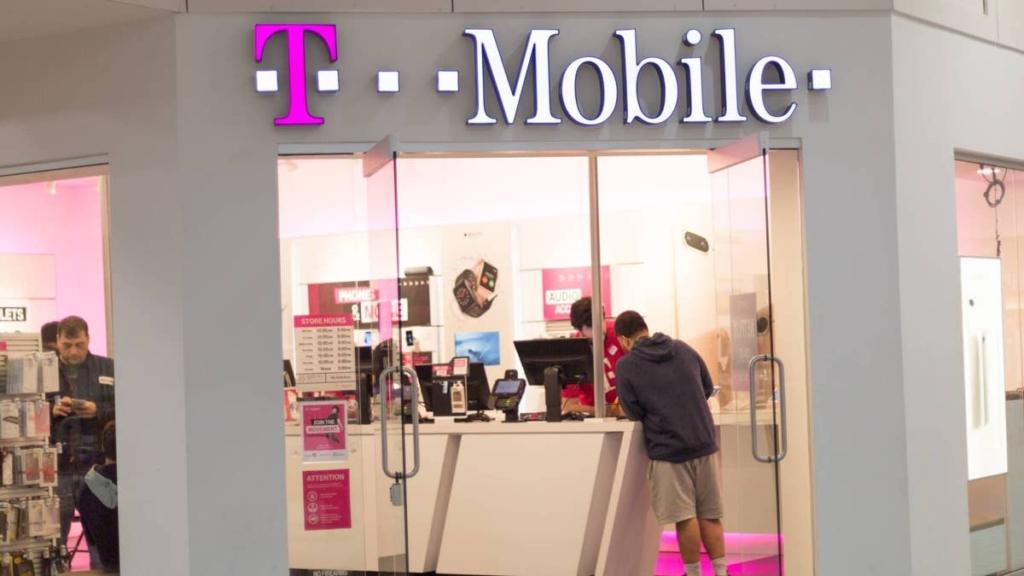
T-Mobile is once again retiring several longtime wireless plans, leaving some customers to face significant changes to their monthly bills.
The last time T-Mobile discontinued wireless plans was in August last year, when it automatically migrated select customers off of its Magenta, ONE Plus and Sprint Max plans and placed them onto its Go5G Plus plan, which doesn’t include taxes and fees in the monthly price.
Even though this change didn’t result in a price increase, some customers still criticized the move by labeling it as a bait-and-swtich tactic.
It is clear that consumers are becoming more sensitive about their wireless plans. Last year, T-Mobile’s postpaid phone churn, the percentage of customers who ended their service, hit 0.93%, up from 0.86% in 2024, according to its fourth-quarter earnings report for 2025.
T-Mobile kicks customers off legacy wireless plans
Despite this reality, T-Mobile is retiring legacy wireless plans that make up 1,100 legacy billing codes, resulting in price increases for some customers, according to a recent report from The Mobile Report.
The change will impact customers on plans that were launched almost 15 years ago, this includes Magenta, Simple Choice and ONE. Plans that are older than Simple Choice will likely be impacted as well.
In an email sent to employees, T-Mobile Chief Operating Officer Jon Freier said that the company is discontinuing these legacy plans because their lack of features.
“There’s a group of customers still on plans built nearly 15 years ago, in the 3G and 4G era, long before our 5G network was fully deployed,” said Freier. “These older plans came with real restrictions like limited premium data, 480p video, reduced hotspot data, and little to no international roaming.”
Related: T-Mobile warns customers that a key service will double in price
“Those limitations made sense at the time, but our network has long outgrown them and so have customer expectations,” he continued.
He also said that retiring these plans “reduces significant complexity” in T-Mobile’s system by removing 1,100 legacy codes, and simplifying plans will allow the company to invest more resources into enhancing the customer experience.
Customers on these outgoing legacy plans will automatically be switched to one of the company’s newer offerings, such as its Experience plan lineup.
Freier said that moving customers to the latest plans will provide them with T-Mobile’s 5-year price guarantee and access to better features.
“They’ll get more premium data, more high-speed hotspot, and better international coverage,” he said. “They’ll have access to benefits like Netfilx, Hulu, or Apple TV On Us, enhanced Scam Shield features, and travel perks like AAA. For business customers, that includes, M365, T-Satelllite, Scam Shield, and more. And everyone gets our 5-year price guarantee.”
He also said that “nearly half” of these legacy customers wont see their monthly bill increase, but for those who do, increases will be “up to $6 per line.” Customers who will face a pricing adjustment from the change will be notified.
Those impacted by these changes, which will roll out over the next few weeks, will see them reflected in the next billing cycle.
Helen89/Shutterstock
T-Mobile eliminates KickBack discount
In addition to moving legacy customers onto newer plans, T-Mobile is also discontinuing its KickBack discount.
Customers with this discount recieve $10 off of each wireless line on their account that used under 2GB of mobile data in a month.
T-Mobile customers have flagged on social media platform Reddit that they received a text message from the carrier warning them that the discount will officially retire on July 13.
“Starting 7/13/26, the T-Mobile KickBack program is retiring,” reads a message one customer received from T-Mobile. “Eligible lines will no longer receive monthly KickBack credits for using 2GB of data or less. You’ll keep your other current benefits and continue to get savings from all the other perks T-Mobile offers.”
Why T-Mobile’s changes could lead to higher customer losses
The changes from T-Mobile comes after it has rolled out several price increases this year.
In January, it increased its Regulatory Programs & Telco Recovery fee, which customers pay on their monthly bills. The company also started charging $3 a month for its Apple TV “On Us” perk, which had been free for Plus-level phone plan customers since 2021.
By March, T-Mobile frustrated customers when it began attaching a $35 Device Connection Charge to devices directly purchased from Apple. It also raised its restocking fee for device returns by $5 to $10 (depending on the device’s price).
Last month, T-Mobile even increased the rate customers pay to make calls while traveling outside the U.S. from from $0.25 per minute to $0.50 per minute.
In light of these recent pricing adjustments, T-Mobile’s latest phone plan and discount change may push customers over the edge. A survey from Oxio in March found that price increases is the top reason that customers reevaluate their wireless plans.
What’s prompting Americans to switch mobile plans:
- Seven in 10 Americans evaluate their wireless plan at least once a year.
- Higher monthly costs are a major reason for this behavior, as 58% of Americans said a bill increase pushes them to reconsider their current plan.
- Also, 79% said affordable pricing is a top factor when choosing a new plan, while 63% said reliable network coverage, 60% said speed and performance, and 40% said clear, transparent billing.
Source: Oxio
In the survey release, Oxio CEO Nicolas Girard said that consumers are “actively evaluating plans, comparing value and reacting quickly to price increases.”
“Switching is no longer rare, and the friction that once protected incumbents is fading,” said Girard. “Loyalty can no longer be assumed. It must be earned and re-earned.”
“Network performance still matters, but it’s no longer the only story,” he added. “As coverage and speed converge, differentiation is shifting to the experience around connectivity: clear pricing, seamless onboarding, instant activation, and value-added services that feel genuinely useful.”
As T-Mobile faces the risk of losing customers due to price hikes, it is also facing heightened competition in the wireless market, making further customer losses more likely.
While the company has dropped new lower-priced phone plans this year, such as “Better Value” and “Experience More with Appreciation Savings,” AT&T and Verizon have also been revamping their phone plan offerings to attract price-concious consumers.
For instance, in March, AT&T added three new wireless plans to its lineup: AT&T Value 2.0, AT&T Extra 2.0 and AT&T Premium 2.0. Each have a starting monthly price of $50, $70, and $90, respectively, for a single line.
More T-Mobile News:
- T-Mobile adds new internet plan restriction customers will feel
- T-Mobile drops new free perks for customers as pressure builds
- T-Mobile quietly expands a convenient service for customers
The company also introduced its OneConnect subscription, which is $90 per month and offers customers combined wireless and fiber internet service.
By May, AT&T also launched Build-A-Plan, a customizable phone plan that has a base price of $15 per month.
Verizon hopped on the bandwagon of rolling out more affordable phone plan options for customers in June when it launched its Simplicity plan, which offers wireless service for $45 a month, but the price decreases to $30 if autopay and Switcher discounts are applied.
The carrier also added its Verizon One plan to its lineup, which includes combined mobile and home internet service for $70 per month.
In a statement to the Wireles Infrastructure Association in January, Verta Wireless CEO Joshua Broder predicted a “highly competitive environment” in the wireless industry this year as carriers “push hard on network quality, coverage, and efficiency.”
“Competition among the Big Three (and their MVNO partners) is exceptionally strong across retail pricing and offerings, spectrum deployment, network coverage and capacity, and overall network performance,” said Broder.
Related: T-Mobile drops new free perks for customers as pressure builds